





Technical SEO Checklist for Enterprise Sites
Daniel Murillo
•2026-05-18

A company launches new service pages, expands into new markets, adds product categories, redesigns sections of the site, migrates platforms, introduces personalization systems, integrates tracking tools, and gradually layers more complexity onto the website. Individually, none of those decisions seem dangerous. But over time, the structure underneath the site becomes harder to manage, harder for search engines to interpret, and increasingly inefficient to scale.
That is why enterprise SEO feels very different from SEO for smaller websites.
At enterprise scale, technical issues compound. A small indexing inconsistency can affect thousands of pages. Weak internal linking can dilute authority across entire sections of the site. Crawl inefficiencies can prevent search engines from prioritizing the pages that actually matter. And once those problems accumulate, visibility begins to decline in ways that are difficult to diagnose quickly.
This is why technical SEO becomes foundational infrastructure rather than simply an optimization layer.
The companies that succeed long term in organic search are usually the ones treating technical SEO like a system, not a checklist.
Enterprise SEO Is About Scalability
One of the biggest mistakes organizations make is approaching technical SEO as a one-time project.
Enterprise websites are never static. They evolve constantly. Development teams push updates, content teams create new pages, regional divisions expand site structures, and marketing teams launch campaigns independently. Without governance, the website gradually becomes fragmented.
Search engines notice that fragmentation.
A site may still look visually polished from the outside, but underneath, it can become structurally inconsistent. Duplicate pages begin appearing. Redirect chains multiply. URL structures lose consistency. Important pages get buried deeper into the architecture. Legacy templates continue generating low-value URLs that no longer serve a purpose.
At small scale, those inefficiencies may not create visible problems immediately.
At enterprise scale, they create instability.
This is why technical SEO for enterprise sites is ultimately about scalability. The question is not simply whether the site ranks today. The real question is whether the website can continue growing without weakening its search infrastructure over time.
Crawlability Comes Before Visibility
This creates one of the most common enterprise SEO issues: crawl inefficiency.
For smaller websites, crawl budget is rarely a serious concern. But enterprise environments operate differently because search engines must prioritize where they spend their resources. If a site contains hundreds of thousands of URLs, poor crawl governance can significantly reduce visibility for important sections of the site.
This is why strong technical SEO starts with clarity.
Search engines should immediately understand which pages matter, which pages are canonical, and which sections deserve prioritization. The cleaner the structure becomes, the easier it is for search engines to process the site efficiently.
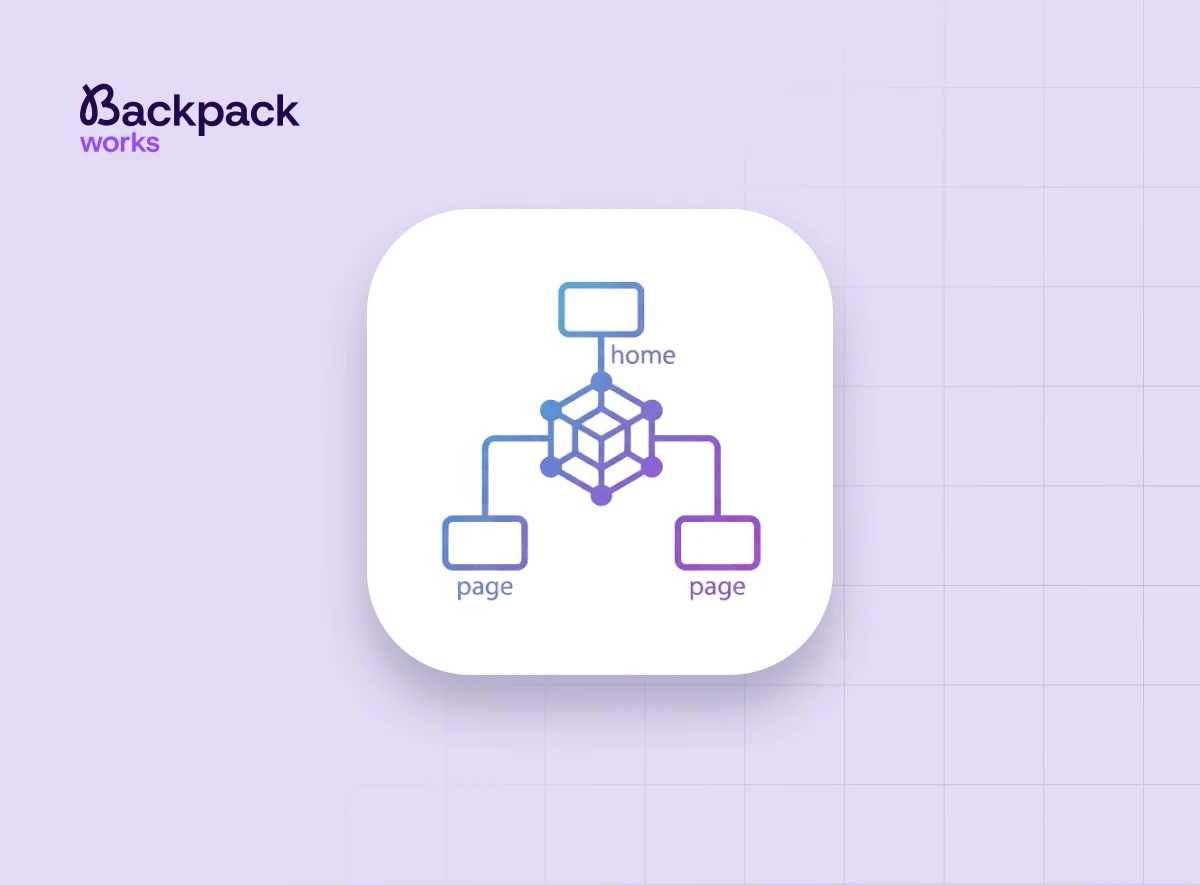
Site Architecture Shapes Search Performance
The goal is not simply organizing content for users. It is creating a structure search engines can interpret confidently.
At enterprise scale, clarity becomes a competitive advantage.
Indexation Problems Are Often Invisible
One of the most dangerous assumptions enterprise companies make is believing that all published pages are properly indexed.
In reality, large websites frequently experience partial indexing, duplicate indexing, or index bloat without realizing it.
Some pages become over-indexed while strategically important content remains weakly connected internally. Search engines may interpret low-value pages as more important simply because the site structure unintentionally reinforces them.
This creates misalignment between business priorities and search visibility.
Technical SEO is often less about creating more pages and more about helping search engines understand which pages actually deserve authority.
That distinction becomes increasingly important as websites scale.
Without continuous indexation oversight, enterprise sites slowly lose efficiency. Rankings fluctuate unpredictably because search engines struggle to determine which pages should carry the strongest visibility signals.
Performance Is More Than a UX Issue
Enterprise websites tend to accumulate technical weight over time.
Tracking scripts, personalization layers, analytics tools, testing platforms, embedded media, JavaScript frameworks, and third-party integrations gradually increase complexity. Eventually, performance begins suffering across the site.
Many organizations still think about performance primarily through user experience metrics, but performance also affects search infrastructure directly.
Slow websites reduce crawl efficiency. Heavy rendering environments make content harder for search engines to process consistently. JavaScript-dependent pages can create rendering delays that impact indexation.
This is why Core Web Vitals continue to matter.
Not because they function as simplistic ranking hacks, but because they reflect the overall technical health of the website. Fast, stable, accessible websites create better environments for both users and search engines.
Performance optimization at enterprise scale is not only about speed.
It is about reducing friction across the entire ecosystem.
Internal Linking Becomes More Important as Sites Grow
One of the most overlooked enterprise SEO opportunities is internal linking strategy.
Large websites naturally build authority over time, but many fail to distribute that authority intentionally. Important pages become buried several layers deep while lower-priority pages receive stronger visibility simply because of structural inconsistencies.
Search engines use internal linking to understand relationships between pages.
Strong internal linking helps reinforce:
- topical authority
- page importance
- semantic relevance
- conversion pathways
The best enterprise websites treat internal linking strategically rather than passively.
Structured Data Creates Semantic Clarity
As websites scale, search engines need more contextual guidance.
This is where structured data becomes increasingly valuable.
Schema markup helps search engines understand the meaning behind content rather than simply processing text at surface level. For enterprise sites, this additional layer of semantic clarity becomes critical because complexity naturally increases over time.
Products, services, articles, locations, FAQs, reviews, authors, and organizational information all benefit from structured interpretation.
This is especially relevant now as AI-driven search continues evolving.
AI systems rely heavily on semantic relationships and machine-readable structures. Enterprise websites with stronger structured data frameworks become easier to retrieve, summarize, and reference across AI-powered search experiences.
Technical SEO is no longer only about rankings.
It is becoming part of broader AI discoverability infrastructure.
Enterprise Migrations Are High-Risk Moments
Few moments create more SEO risk than enterprise website migrations.
Whether it is a redesign, CMS transition, domain consolidation, or platform rebuild, migrations can disrupt years of accumulated authority if technical SEO is not deeply integrated into the process.
The problem is that many organizations still treat SEO as a final-stage review rather than a foundational planning layer.
That approach creates avoidable losses.
AI Search Is Raising the Technical Standard
The rise of AI-powered search is increasing the importance of technical SEO even further.
AI systems process websites structurally. They rely on semantic organization, contextual clarity, and retrieval efficiency. Enterprise websites with fragmented architecture or inconsistent technical governance become harder for AI systems to interpret confidently.
Meanwhile, technically mature websites gain advantages beyond traditional rankings.
They become easier to retrieve inside conversational AI systems, AI-generated summaries, and search experiences increasingly shaped by machine interpretation rather than simple keyword matching.
This is where enterprise SEO is heading.
The future is not only about visibility inside search engines. It is about becoming structurally understandable across intelligent retrieval systems.
Technical SEO Is Really About Stability
At its core, technical SEO for enterprise sites is really about stability.
Can search engines consistently access your content? Can they understand the hierarchy of the website clearly? Can authority flow efficiently across important pages? Can the site continue scaling without creating fragmentation?
The strongest enterprise websites are rarely the ones chasing shortcuts.
They are the ones building resilient digital ecosystems capable of supporting long-term growth without sacrificing structural clarity.
As AI search continues reshaping how discovery works online, that resilience becomes even more valuable.
Request a Strategy Call

Daniel Murillo
•2026-05-12
AI SEO: How to Optimize for ChatGPT and AI Search
Search is changing faster than most companies realize

Gabriel Pelc
•2026-04-07
The Strategic Guide to the Modern Website Development Stack: Accelerating B2B SaaS Growth
Explore how modern web development boosts user experience, ensures data privacy and delivers superior page speed. A complete guide for high-performance sites.
Gabriel Pelc
•2026-03-27
Conversion-Focused Web Design Principles for 2026
Discover how conversion focused web design principles improves B2B growth performance. Tactical strategies, implementation frameworks, and measurable ROI insights.
Daniel Murillo
•2026-05-12
AI SEO: How to Optimize for ChatGPT and AI Search
Search is changing faster than most companies realize
Gabriel Pelc
•2026-04-07
The Strategic Guide to the Modern Website Development Stack: Accelerating B2B SaaS Growth
Explore how modern web development boosts user experience, ensures data privacy and delivers superior page speed. A complete guide for high-performance sites.
Gabriel Pelc
•2026-03-27
Conversion-Focused Web Design Principles for 2026
Discover how conversion focused web design principles improves B2B growth performance. Tactical strategies, implementation frameworks, and measurable ROI insights.